

You can call this the basic tenet of the Natural Law, which is that we should treat others as we would like them to treat us, that we should not do to another what we would not want another to do to us.

You can call this the basic tenet of the Natural Law, which is that we should treat others as we would like them to treat us, that we should not do to another what we would not want another to do to us.
Thomas Merton

The Natural Law
Topic: Virtue, Morality, & Ethics
“You can call this the basic tenet of the Natural Law, which is that we should treat others as we would like them to treat us, that we should not do to another what we would not want another to do to us.”
Thomas Merton (born January 31, 1915, in Prades, France – died December 10, 1968, in Bangkok, Thailand) was a Trappist monk, writer, poet, and spiritual thinker whose life bridged the worlds of contemplation and social engagement. The son of artists—an American mother and a New Zealand father—Merton spent his early years in France, England, and the United States. After losing both parents at a young age, he pursued studies at Cambridge and later at Columbia University, where he earned a master’s degree in English literature. Though immersed in the intellectual and cultural life of New York, Merton experienced a profound spiritual awakening that led to his conversion to Catholicism in 1938.
In 1941, seeking solitude and union with God, Merton entered the Abbey of Gethsemani in Kentucky. Within the cloister, he discovered not an escape from the world but a deeper way of engaging it. His autobiography, The Seven Storey Mountain (1948), recounting his restless youth and the path to his monastic vocation, became an unexpected bestseller, resonating with postwar readers searching for direction and meaning. Over the following decades, Merton wrote prolifically—journals, essays, poetry, and spiritual reflections—exploring prayer, contemplation, identity, and the presence of God in the midst of ordinary life. Works such as New Seeds of Contemplation and No Man Is an Island express his conviction that true contemplation is rooted in love, attention, and the recognition of divine presence in all creation.
In his later years, Merton emerged as a powerful voice for interfaith dialogue, peace, and social justice. He corresponded with spiritual figures such as the Dalai Lama, Thich Nhat Hanh, and D.T. Suzuki, discovering resonances between Christian mysticism and Eastern contemplative traditions. His writings on nonviolence, racial justice, and nuclear disarmament reflected a spirituality that united inner transformation with moral responsibility. Merton’s untimely death during an interreligious conference in Thailand marked the end of a life devoted to bridging contemplation and compassion. His legacy endures as an invitation to seek God in silence, to live truthfully, and to recognize the deep unity that underlies the world’s divisions.
New Seeds of Contemplation
Merton, Thomas. New Seeds of Contemplation. Directions, 1961, p. 71.
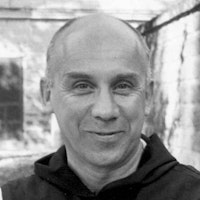
Thomas Merton
Copyright © 2017 – 2026 LuminaryQuotes.com About Us
Thomas Merton, New Seeds of Contemplation
The Golden Rule Chronology
1961 Monk Thomas Merton’s New Seeds of Contemplation explains God’s will as requiring that we unite with one another in love: “You can call this the basic tenet of the Natural Law, which is that we should treat others as we would like them to treat us, that we should not do to another what we would not want another to do to us.”
–Rev., Dr. Harry Gensler S.J. [The Golden Rule Chronology].