


We find the Divine in the light of our own intuition, by growing into an authentic sense of self, by seeing God in other people and in the natural world…
Joan Borysenko

An Authentic Sense of Self
Topic: Self-Cultivation & Health
We find the Divine in the light of our own intuition, by growing into an authentic sense of self, by seeing God in other people and in the natural world, and by doing what comes naturally, bringing out the best potential in others by mirroring the goodness inside of them. When we are doing this, the peace of mind that is our birthright shines through.
Joan Borysenko, born in 1945, grew up with a strong curiosity about both science and spirituality. Raised in a working-class family, she developed an early interest in the mind-body connection, influenced by personal experiences with illness and healing. She pursued her passion for understanding human health by earning a doctorate in medical sciences from Harvard Medical School, where she also completed three post-doctoral fellowships in experimental pathology, behavioral medicine, and psychoneuroimmunology. As an instructor in medicine at Harvard, she contributed to emerging research on the role of psychology in physical health, laying the groundwork for her later work in integrative medicine.
Joan Borysenko co-founded and directed the Mind-Body clinical programs at Harvard Medical School-affiliated hospitals, now part of Beth Israel Deaconess Medical Center. As a licensed psychologist, she expanded her focus beyond traditional medical settings, incorporating women’s health, stress management, and spirituality into her work. Her ability to connect scientific research with practical healing methods led her to develop workshops and educational programs that emphasized the role of meditation, emotional well-being, and holistic health.
A prolific writer and speaker, Joan Borysenko has authored numerous books, including Minding the Body, Mending the Mind (1987), A Woman’s Book of Life (1996), and A Woman’s Journey to God (1999). She founded Mind/Body Health Sciences, LLC, in Boulder, Colorado, and has been involved in interspiritual mentorship. Through her lectures, media appearances, and teachings, she continues to explore the relationship between science, psychology, and spirituality, making significant contributions to the evolving field of integrative medicine.
Borysenko, Joan. A Woman's Journey to God: Finding the Feminine Path. Riverhead Books, 1999.
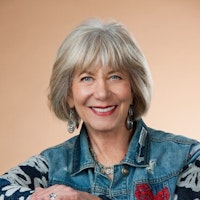
Joan Borysenko
Theme: Being in Self
About This Joan Borysenko Quotation [Commentary]
Joan Borysenko begins inwardly: “We find the Divine in the light of our own intuition, by growing into an authentic sense of self.” Her words keep spiritual life close to what is genuine and inwardly known. “The light of our own intuition” and “an authentic sense of self” belong together. In relation to Being In Self, this suggests a quiet honesty in which women and men alike live from what is true rather than from what is imposed.
She then turns outward: “by seeing God in other people and in the natural world, and by doing what comes naturally.” The self she describes is not sealed off from others. It becomes more able to see God “in other people and in the natural world,” and to live in a way that is unforced. Joan Borysenko extends this movement further: “bringing out the best potential in others by mirroring the goodness inside of them.” To mirror “the goodness inside of them” is to meet others with respect and to reflect back what is sacred in them.
She closes with the fruit of this way of life: “When we are doing this, the peace of mind that is our birthright shines through.” Peace is not something strained after. It “shines through” when intuition, an “authentic sense of self,” seeing God in others and in the natural world, and “bringing out the best potential in others” are all held together. In that sense, Being In Self is not self-enclosure. It is a way of living in which the Divine is found within, among others, and in the natural world.
Additional Joan Borysenko Quotations
“Saint John of the Cross taught that interior silence is the place where Spirit secretly anoints the soul and heals our deepest wounds. Make time during the day to be alone — not to read or watch TV — but to be quiet. Garden, sit outside, walk mindfully, go into nature, meditate, be with music. Most of us will give our time and energy away to others, leaving little for ourselves. The disbalance that occurs when you squeeze yourself out of your own life creates new stress that prevents the healing of old pain. Save time to let silence be a partner in your healing.”
—Joan Borysenko, Fire in the Soul: A New Psychology of Spiritual Optimism.
“From a spiritual vantage point our major life task is much larger than making money, finding a mate, having a career, raising children, looking beautiful, achieving psychological health, or defying aging, illness, and death. It is a recognition of the sacred in daily life — a deep gratitude for the wonders of the world and the delicate web of inter-connectedness between people, nature and things — a recognition that true intimacy based on respect and love is the measure of a life well lived. This innate female spirituality underlies an often unspoken commitment to protect our world from the ravages of greed and violence.”
—Joan Borysenko, A Woman’s Book of Life: The Biology, Psychology, and Spirituality of the Feminine Life Cycle.
“Relationship is an invitation into a parallel universe where fear, doubt, and separation are unknown. There are no miracles in the house of belonging, other than the homely reality of love. The path to God doesn’t require scaling mountains, slaying dragons, or living in caves while dining on meager rations of locusts and wild honey. It only requires the eyes of the mind to recognize what the heart has always known. The Ground of our Being is love.”
—Joan Borysenko, A Woman’s Journey to God: Finding the Feminine Path.
“These experiences of being at home in yourself, centered in some essential kernel of what it is to be human, are profoundly natural. . . . Sages from all of the world’s traditions tell us that such experiences of ‘true nature’ are expressions of our essential inborn humanity — like the nectar that’s the subtlest and most exquisite essence of a flower. True nature lacks the self-consciousness, fear, and compulsive need to make things happen in our own way, which creates so much suffering and unhappiness. Aligning with true nature allows freedom to love to move into alignment with larger currents of wisdom and bring new ideas to fruition.”
—Joan Borysenko, Your Soul’s Compass: What Is Spiritual Guidance?
Resources
Related Quotes
Copyright © 2017 – 2026 LuminaryQuotes.com About Us