

I never again want to see the face of a starving child or hear the weeping of a mother who has lost her son to war. Peace, this is what my husband gave his life for…

I never again want to see the face of a starving child or hear the weeping of a mother who has lost her son to war. Peace, this is what my husband gave his life for…
Jehan Sadat

Never Again
Topic: Global Peace & Development
“I never again want to see the face of a starving child or hear the weeping of a mother who has lost her son to war. Peace, this is what my husband gave his life for, and I want the world to know that he did not die in vain. Peace, this is what will make me very happy.”
Jehan Sadat was born Jehan Safwat Raouf on August 29, 1933, in Cairo, Egypt, to an Egyptian father, Dr. Safwat Raouf, and an English mother, Gladys Cotterill. Raised in a culturally mixed home, she received a Muslim upbringing and attended a Christian secondary school for girls. At 15, she met Anwar Sadat, recently released from prison for anti-colonial activities. Despite her parents' concerns, they married in 1949. Their marriage lasted over three decades, during which Anwar Sadat became Egypt’s president and a key figure in national change. They had four children: Noha, Jihan, Lobna, and Gamal.
As First Lady from 1970 to 1981, Jehan Sadat used her role to advocate for women’s rights and social services. She influenced legal reforms that became known as the “Jehan Laws,” which expanded women’s rights in divorce and child custody. Her efforts included founding the al Wafa' Wa Amal Rehabilitation Center for disabled veterans and visually impaired children, as well as organizations for cancer care, blood donation, and child welfare. She also helped create women’s cooperatives and represented Egypt in international women’s conferences, co-founding the Arab-African Women’s League.
After her husband’s assassination in 1981, Jehan Sadat returned to academic life, earning a PhD in Comparative Literature from Cairo University in 1986. She later held academic positions, including at the University of Maryland. She published two memoirs—A Woman of Egypt (1987) and My Hope for Peace (2009)—and wrote Arabic poetry under a pseudonym. She died on July 9, 2021, at age 87, and was buried beside her husband at the Unknown Soldier Memorial in Cairo. Over her lifetime, she received numerous awards for her advocacy and humanitarian work.
Jehan Sadat, as quoted in Remembering Jehan Sadat, Anwar Sadat Chair for Peace and Development, University of Maryland, 2021, https://sadat.umd.edu/sites/sadat.umd.edu/files/Remembering%20Jehan%20Sadat%20Transcript.pdf. Accessed 13 Aug. 2025.
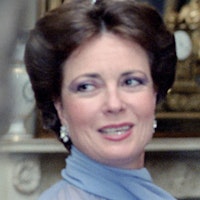
Jehan Sadat
Theme: Peace
About This Jehan Sadat Quotation [Commentary]
Jehan Sadat begins with what she never again wants to witness: “the face of a starving child” and “the weeping of a mother who has lost her son to war.” Her words stay close to the human cost of conflict: hunger, grief, and loss carried by children, mothers, families, and nations. She does not speak in abstractions. She names the suffering that war leaves in human lives.
She then turns to her husband’s sacrifice: “Peace, this is what my husband gave his life for.” The repeated word “Peace” gives her statement steadiness and tenderness. Jehan Sadat links Anwar Sadat’s death to her hope that “the world” will know “that he did not die in vain.” In her words, remembrance becomes a responsibility: to honor life by refusing to accept the suffering war continues to create.
Her final sentence is simple and intimate: “Peace, this is what will make me very happy.” After “a starving child,” “a mother who has lost her son,” and her husband’s death, Jehan Sadat ends with happiness understood as relief from sorrow. Her words point toward a world where children are fed, mothers are not broken by war, and sacrifice is not wasted. Peace, for Jehan Sadat, means the protection of life, dignity, and shared belonging.
Jehan Sadat
Jehan Sadat wrote this reflection in My Hope for Peace as a summation of the cost of war and the personal meaning of peace in her life.
Having lived through decades of conflict and having lost her husband, Egyptian President Anwar Sadat, to an act of political violence after the signing of the Egypt–Israel Peace Treaty, she remained committed to reconciliation. Her words affirm a peace rooted in shared humanity, not political expediency.
Additional Jehan Sadat Quotations
Resources
Related Quotes
Copyright © 2017 – 2026 LuminaryQuotes.com About Us