

“Rabbi, who sinned, this man or his parents, that he was born blind?” Jesus answered, “It was not that this man sinned, or his parents, but that the works of God might be made manifest in him.”

“Rabbi, who sinned, this man or his parents, that he was born blind?” Jesus answered, “It was not that this man sinned, or his parents, but that the works of God might be made manifest in him.”
Jesus of Nazareth

The Works of God
Topic: Overcoming Adversity
As he passed by, he saw a man blind from his birth. And his disciples asked him, “Rabbi, who sinned, this man or his parents, that he was born blind?” Jesus answered, “It was not that this man sinned, or his parents, but that the works of God might be made manifest in him.”… As he said this, he spat on the ground and made clay of the spittle and anointed the man’s eyes with the clay, saying to him, “Go, wash in the pool of Siloam.” So he went and washed and came back seeing.
Jesus of Nazareth is a cornerstone of spiritual thought, a figure whose influence transcends the boundaries of religious affiliation. Born around 4 BCE in Bethlehem, he is primarily known as the foundational figure of Christianity but also holds a significant role in Islam as a prophet. His life journey, from his humble birth to his baptism by John the Baptist, was marked by a public ministry that centered around themes of love, compassion, forgiveness, and justice. These teachings were accompanied by miraculous events, garnering a community of followers and disciples. His message aimed to shake the foundations of existing religious practices that were rigid and exclusive, offering instead a path rooted in compassion and inclusivity.
The Universal Christ concept enriches our understanding of who Jesus was and is. Especially emphasized in Franciscan traditions and mystical Christianity, this idea posits Jesus as a unique but not isolated manifestation of God's ongoing presence and action in the world. Through this lens, Jesus isn't just a figure confined to a particular time and space; he becomes an enduring representation of divine love and compassion. He serves as a window through which we can understand how God interacts with the world, offering a model for a potential divine-human union that respects the dignity and sacredness of all life forms.
In harmonizing these perspectives, we recognize Jesus both as a historical figure and as a transcendent representation of divine compassion. Whether viewed through the lens of traditional faith narratives or the broader scope of the Universal Christ, Jesus emerges as a teacher who calls us to enact love and compassion in our lives. His teachings, whether seen as divine or profoundly humane, offer a framework for community and interconnectedness that continues to be relevant across different cultures and religious beliefs. In a world often fractured by division and lack of understanding, the multi-faceted legacy of Jesus offers a timeless lesson in the transformative power of compassion.
The Book of John
Wilson, Andrew, editor. World Scripture - a Comparative Anthology of Sacred Texts. Paragon House, 1991, p. 503, [The Book of John 9.1-7].
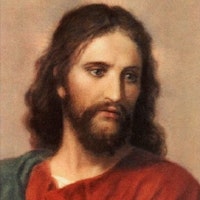
Jesus of Nazareth
Theme: Adversity
About This Jesus of Nazareth (the Book of John) Quotation [Commentary]
As Jesus of Nazareth “passed by,” he “saw a man blind from his birth.” The disciples begin with a question that looks for blame: “Rabbi, who sinned, this man or his parents, that he was born blind?” Jesus answers without assigning guilt: “It was not that this man sinned, or his parents.” He turns their attention to another meaning held within suffering: “but that the works of God might be made manifest in him.” Jesus [Yeshua] shifts the moment from accusation to what can be revealed.
Then the passage stays close to action. Jesus “spat on the ground and made clay of the spittle and anointed the man’s eyes with the clay,” and he tells him, “Go, wash in the pool of Siloam.” The man responds as he is able: “So he went and washed and came back seeing.” “The works of God” appear here in touch, instruction, and response—work done in a person, and also through a person.
The disciples’ first words are “who sinned,” but Jesus gives another way to speak and to see: “not that this man sinned, or his parents,” “but that the works of God might be made manifest in him.” When hardship meets us—in ourselves or in another—we can follow that sequence: see the person, release the need to pin blame, and move toward healing steps that can be taken now. If we name God as our Heavenly Parent—Mother and Father—this is a parental mercy made visible: not condemnation, but care that acts, and invites us to act.
The Book of John 9.1-7
Related Quotes
Copyright © 2017 – 2026 LuminaryQuotes.com About Us