

The [Twice Born] process is one of redemption, not of mere reversion to natural health…

The [Twice Born] process is one of redemption, not of mere reversion to natural health…
William James

Being Twice Born
Topic: Self-Cultivation & Health
The [Twice Born] process is one of redemption, not of mere reversion to natural health, and the sufferer, when saved, is saved by what seems to her or him a second birth, a deeper kind of conscious being than she or he could enjoy before.
William James was born on January 11, 1842, in New York City, into a wealthy and intellectually stimulating family. He was the eldest of five children, including his brother Henry James, who would become a renowned novelist. William's father, Henry James Sr., was a Swedenborgian theologian whose unconventional ideas greatly influenced his children. The family traveled extensively in Europe during William's youth, exposing him to diverse cultures and educational systems. James initially pursued painting but eventually turned to science, enrolling at Harvard Medical School in 1864. He earned his M.D. in 1869 but never practiced medicine, instead focusing on psychology and philosophy. James married Alice Gibbens in 1878, and they had five children together. He died on August 26, 1910, at his summer home in Chocorua, New Hampshire.
James's psychological research and writings were groundbreaking and influential. He is often referred to as the "Father of American Psychology" for his pioneering work in the field. In 1890, he published his seminal work, "The Principles of Psychology," which became a foundational text in the discipline. James introduced several key concepts, including the stream of consciousness, the James-Lange theory of emotion, and the idea of habit formation. He was also one of the first to explore the subconscious mind and its influence on behavior. James's approach to psychology was marked by its emphasis on individual experience and the practical applications of psychological insights. He was a proponent of pragmatism in philosophy and functionalism in psychology, both of which focused on the practical consequences of ideas and mental processes.
Throughout his life, James maintained a deep interest in spirituality and wisdom traditions, which significantly influenced his philosophical and psychological work. His exploration of these topics is most evident in "The Varieties of Religious Experience" (1902), based on his Gifford Lectures. In this work, James examined the nature of religious and mystical experiences from a psychological perspective, arguing for their validity and importance in human life. He was particularly interested in the practical effects of religious belief on individuals and society. James's approach to spirituality was notably open-minded and pluralistic; he sought to understand diverse religious experiences without reducing them to mere psychological phenomena. His work in this area continues to be influential in the fields of religious studies, psychology of religion, and philosophy of religion, bridging the gap between scientific inquiry and spiritual exploration.
The Varieties of Religious Experience
James, William. The Varieties of Religious Experience: A Study of Human Nature. London: Penguin Books, 1902.
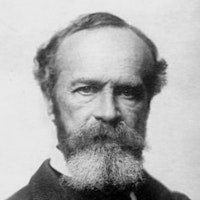
William James
Theme: Healing
About This William James Quotation [Commentary]
William James distinguishes the “twice-born” process from a simple return to an earlier condition. It is “one of redemption, not of mere reversion to natural health.” In the larger passage, William James explains that after deep suffering, “the happiness of Eden never comes again.” What may come instead is “something vastly more complex.” Healing, in this sense, does not erase what has happened or restore a person to who they were before. It becomes what William James calls “a second birth.”
This second birth comes because the sufferer’s relation to suffering has changed. William James contrasts this state with “the simple ignorance of ill”: the person has encountered what cannot simply be forgotten, yet life can still take on meaning. The sufferer is “saved” into “a deeper kind of conscious being,” one that can hold realities an earlier consciousness could not. William James does not present suffering itself as good; he describes the possibility that a life which has passed through suffering may become deeper than one merely restored to its former state.
William James gives healing a meaning beyond simple recovery. “Natural health” remains valuable, but the twice-born experience points toward a changed way of being conscious. What has been suffered is not simply reversed; it becomes part of a more complex understanding of life. The movement toward “redemption” and “a deeper kind of conscious being” suggests that recovery may sometimes mean not returning to exactly who we were before, but entering a fuller awareness of life.
Additional William James Quotes
“The real witness of the spirit to the second birth is to be found only in the disposition of the genuine child of God, the permanently patient heart, the love of self eradicated. And this, it has to be admitted, is also found in those who pass no crisis, and may even be found outside of Christianity altogether.”
—William James [The Varieties of Religious Experience: A Study in Human Nature (1902) Lecture X, “Conversion, concluded”].
Related Quotes
Copyright © 2017 – 2026 LuminaryQuotes.com About Us