


The soul is the sense of something higher than ourselves, something that stirs in us thoughts, hopes, and aspirations which go out to the world of goodness, truth and beauty.
Albert Schweitzer

What the Soul Is
Topic: Immanence & Transcendence
No one can give a definition of the soul. But we know what it feels like. The soul is the sense of something higher than ourselves, something that stirs in us thoughts, hopes, and aspirations which go out to the world of goodness, truth and beauty. The soul is a burning desire to breathe in this world of light and never to lose it—to remain children of light.
Albert Schweitzer was born on January 14, 1875, in Kaysersberg, Alsace, into a family deeply rooted in the traditions of religion, music, and education. Both his father and maternal grandfather were Lutheran ministers, and his early exposure to church life, theological study, and classical music shaped his intellectual and spiritual development. He pursued theology and philosophy at the University of Strasbourg, earning a doctorate in philosophy in 1899 with a focus on Immanuel Kant’s religious thought. In 1900, he received his licentiate in theology. His academic and pastoral work during this period included preaching at St. Nicholas Church and serving in leadership roles at the Theological College of St. Thomas. In 1906, he published The Quest of the Historical Jesus, a critical work that contributed to modern theological scholarship.
Alongside his theological and philosophical work, Albert Schweitzer was a gifted musician. He began studying piano and organ in childhood and was performing publicly by the age of nine. He went on to become an internationally known concert organist, using income from performances to fund both his education and later medical missions. As a musicologist, he published a biography of Johann Sebastian Bach in 1905 and contributed to the study of organ building and playing. In 1905, he made a pivotal decision to study medicine with the goal of becoming a medical missionary. He earned his medical degree in 1913 and soon after established a hospital in Lambaréné, French Equatorial Africa, where he and his wife later endured internment during World War I.
After returning to Lambaréné in 1924, Albert Schweitzer dedicated the remainder of his life to expanding and maintaining the hospital, which grew into a complex capable of treating hundreds of patients. He combined the roles of physician, surgeon, pastor, administrator, writer, and host, drawing on his wide range of training and experience. His written works during this time included On the Edge of the Primeval Forest and Civilization and Ethics. Schweitzer received several international honors, including the Goethe Prize and the 1953 Nobel Peace Prize. The prize money supported the establishment of a leprosarium at Lambaréné. Albert Schweitzer died there on September 4, 1965, leaving behind a legacy grounded in service, scholarship, and what he called “Reverence for Life.”
Reverence for Life
Schweitzer, Albert. Reverence for Life. Harper & Row, 1969. [Albert Schweitzer (Reverence for Life: The Words of Albert Schweitzer)].
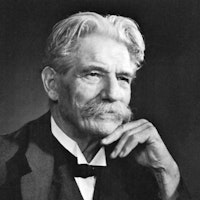
Albert Schweitzer
Theme: Our Soul
About This Albert Schweitzer Quotation [Commentary]
Albert Schweitzer begins with the mystery of the soul: “No one can give a definition of the soul. But we know what it feels like.” He describes the soul as “the sense of something higher than ourselves,” something that stirs “thoughts, hopes, and aspirations.” These do not remain inward; they “go out to the world of goodness, truth and beauty.” The soul is felt within us, yet it draws us beyond ourselves toward what is good, true, and beautiful.
Albert Schweitzer then calls the soul “a burning desire to breathe in this world of light and never to lose it.” The soul does more than recognize goodness, truth, and beauty; it longs to remain close to them. His words “burning desire” give this longing intensity, while “to breathe in this world of light” suggests something sustaining and necessary. The soul seeks not a passing glimpse of light, but an enduring life within it.
The closing words, “to remain children of light,” bring Albert Schweitzer’s understanding of Our Soul into clear focus. To remain a “child of light” is to preserve the openness through which “thoughts, hopes, and aspirations” continue to reach toward goodness, truth, and beauty. Albert Schweitzer presents the soul as a living desire for “something higher than ourselves”—a desire to breathe in that light, remain within it, and let it shape how we live in the world.
Additional Albert Schweitzer Quotes
Resources
Related Quotes
Copyright © 2017 – 2026 LuminaryQuotes.com About Us