

We’ve been wrong about what our job is in medicine. We think our job is to ensure health and survival. But really it is larger than that. It is to enable well-being. And well-being is about the reasons one wishes to be alive.

We’ve been wrong about what our job is in medicine. We think our job is to ensure health and survival. But really it is larger than that. It is to enable well-being. And well-being is about the reasons one wishes to be alive.
Atul Gawande

What Matters in the End
Topic: Self-Cultivation & Health
“We’ve been wrong about what our job is in medicine. We think our job is to ensure health and survival. But really it is larger than that. It is to enable well-being. And well-being is about the reasons one wishes to be alive…” And it’s not just about prolonging life.
Dr. Atul Gawande was born on November 5, 1965, in Brooklyn, New York, United States, to Sushila and Atmaram Gawande, physicians who had immigrated from India. He grew up in Athens, Ohio, where his parents practiced medicine. Atul Gawande studied biology and political science at Stanford University, graduating in 1987, and continued as a Rhodes Scholar at Balliol College, Oxford. He earned his M.D. from Harvard Medical School in 1995 and his Master of Public Health from the Harvard School of Public Health in 1999. During medical school, he took time away to work on health policy in the Clinton administration, joining his interests in medicine, public health, and the ways institutions affect human lives.
Atul Gawande became a general and endocrine surgeon at Brigham and Women’s Hospital in Boston and a professor at Harvard Medical School and the Harvard T.H. Chan School of Public Health. His work has examined how medical teams and health systems can reduce preventable errors and provide safer, more humane care. He helped lead the World Health Organization’s Safe Surgery Saves Lives initiative and the development of the WHO Surgical Safety Checklist. Atul Gawande also co-founded Ariadne Labs and helped found Lifebox, both devoted to improving health care and surgical safety. From January 2022 to January 2025, he served as Assistant Administrator for Global Health at the U.S. Agency for International Development.
Alongside his work in medicine and public health, Atul Gawande has been a writer for The New Yorker since 1998. His books—Complications, Better, The Checklist Manifesto, and Being Mortal—consider medicine through its achievements as well as its errors, uncertainties, and limits. Being Mortal brought particular attention to aging, serious illness, and the end of life, asking how care can respect what matters most to each person. Across his work as a surgeon, public-health leader, and writer, Atul Gawande has returned to questions of how complex systems can work better, how suffering can be reduced, and how medicine can serve not only health and survival but human well-being.
Being Mortal
Gawande, Atul. “Atul Gawande - What Matters in the End.” Edited by Krista Tippett, On Being with Krista Tippett, The On Being Project, On Being Studios, Oct. 2017, onbeing.org/programs/atul-gawande-what-matters-in-the-end-oct2017/.
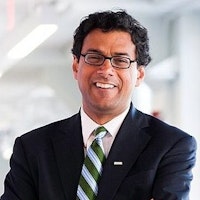
Atul Gawande
Theme: Healing
About This Dr. Atul Gawande Quotation [Commentary]
Atul Gawande begins with a candid correction to the aims of medicine: “We’ve been wrong about what our job is in medicine.” The mistake is not in valuing “health and survival,” but in treating them as sufficient ends. Atul Gawande enlarges the purpose of care when he says medicine’s work “is to enable well-being.” A person can receive treatment intended to preserve life and still lose what makes that life meaningful. Healing, in this deeper sense, attends to the whole person, not only to illness or the prolonging of life.
Atul Gawande makes the meaning of well-being clear: it is “about the reasons one wishes to be alive.” In the surrounding conversation, he asks, “What are we fighting for?” People have “priorities, besides just surviving no matter what” and “reasons you want to be alive.” Good care therefore requires understanding those reasons and asking what treatment will make possible—or might sacrifice. Relationships, purposes, ordinary pleasures, and what a person still wants to experience or share become part of decisions about care.
This is why Atul Gawande says the work is “not just about prolonging life.” His words do not diminish the value of preserving life; they ask what a person is living for. His question, “What does a good day look like?” brings that concern into everyday terms. Even when illness, aging, or mortality cannot be overcome, care can help protect what matters to a person and allow them to remain a “shaper” of their own story. Health and survival then serve the larger purpose Atul Gawande names as “well-being”—the reasons one wishes to be alive.
What Does A Good Day Look Like?
Krista Tippett, host: What does a good day look like? This is the question that transformed Atul Gawande’s practice of medicine. He’s a citizen physician on frontiers of human agency and meaning in light of what modern medicine makes possible. And for the millions who have read his book, Being Mortal, he’s also opened new conversation about the ancient human question of death and what it might have to do with life.
—On Being with Krista Tippet [What Matters in the End, interview with physician and author Atul Gawande].
Krista Tippett’s Interview with Dr. Atul Gawande [Excerpt]
KT: I have actually found it’s very hard to speak — I think this is true in general of religion, that it’s hard to speak about it, but I think that that’s true especially with Hinduism, because it is so much about practice. And it is so wide-open. It’s not ideas. Do you know what I mean?
AG: Yeah. It’s a way of — it’s so embedded in the culture. The line between how do you treat your mom and your dad, how are you supposed to grow up, and your ways of praying — it’s seamless. It is not easy to separate it. For example, I grew up that you never put your foot on a book, because a book is spiritual, and it’s wisdom, and it’s meaningful. And so if I ever put a foot on a book, I had to apologize to the book, put my hand on it and apologize. And I grew up doing that, and I cannot, to this day, put a foot on a book. It’s just sacrilegious. It is dishonoring not only the book, but everything that matters behind it. And it’s inseparable. It’s a way of living and a way of praying, I suppose….
AG: We have new technologies. And so we’re gonna start trying stuff. And then I have so often been there when we said, “Let’s try that one more thing.” And they’re in a bad situation. We say, “Well, should we try surgery? Well, yes. We have to give it a try,” and then they never wake up again. And then you see the suffering that has come from that, because we never once talked about the fact that their life might be mortal, is mortal, [laughs] and I didn’t even know how to begin to have that conversation, and they never woke up. They spent the next couple weeks in the ICU, and then we unplugged the machine. They didn’t get to say goodbye. They didn’t get to say, “I love you.” They didn’t get to say, “I’m sorry.”
And the families, I see that they’re tortured, but then you see, also, when people have those kinds of endings — six months later, they’re more — families are more likely to have PTSD symptoms and depression. And what I realized is, we were not really talking about death, we were talking about — or dying. We were really talking about how do you live a good life all the way to the very end, with whatever comes? And that’s what you begin to unpack.
And the reality was that it’s not do we fight, or do we give up? It’s what are we fighting for? People have priorities, besides just surviving no matter what. You have reasons you want to be alive. What are those reasons? Because whatever you’re living for, along the way, we’ve got to make sure we don’t sacrifice it; and in fact, can we, along the way, whatever’s happening, can we enable it?
“We’ve been wrong about what our job is in medicine. We think our job is to ensure health and survival. But really it is larger than that. It is to enable well-being. And well-being is about the reasons one wishes to be alive.” And it’s not just about prolonging life.
I ended up devoting a chapter to a psychologist from Stanford that it never occurred to me would be where the direction of the book would go. But her name is Laura Carstensen, and she is the psychologist who’s been following people across the course of their lives. She has a cohort of some 300 people, from ages 18 to 94 when they started in her study, and she’d followed them all the way to the end of their life. And then what she opened up for me was the recognition that well-being was really about getting to what made those people happy, and when they lost that happiness is when they no longer were having some control over their own story, that they were not getting to be the shapers of their own story. And that’s what you see in people who are in hospitals or in many nursing homes, not all, where their — our goal is safety, survival, and health. And that’s why you can gradually lose some functions and have some health issues along the way, and yet have great satisfactions in life.
KT: so you have these five questions to ask towards the end of life. And some of them are about your understanding of your illness, your fears and worries for the future, your goals and priorities, what outcomes are acceptable. But the fifth one, which seems to come through again and again, is, “What does a good day look like?” And I think about Annie Dillard saying, “How we spend our days is how we spend our lives.” And you tell so many stories about how just allowing those days to have the simple things that give people a sense of well-being, that that is everything….
Here’s some beautiful language from the epilogue of Being Mortal: “Being mortal is about the struggle to cope with the constraints of our biology, with the limits set by genes and cells and flesh and bone.” The fact that we are limited is something that you come back to. I think you say, “To be human is to be limited.”
AG: So I’m always fighting that sense of needing to take the leap, despite the reality of imperfection, of mistakes, and push forward, make your bets. I have to make my bet without 100 percent of the information and certainty.
And that’s, in many ways, to come full circle, the attraction to me about going into a field like surgery was very similar to the ones that drew me into the world of politics, which is that the best people I saw in surgery were like the best leaders, politicians I saw, who recognized that we’re limited, that you don’t have all the knowledge, that your abilities are imperfect, the information is incomplete, and yet, there are times when acting is the better choice than not to act. And then you live with the consequences and learn from them, take ownership and responsibility, and move on. And that sense of enacting that in our lives feels really important for me to aspire to.
KT: Yeah, less people were interested. And it was just full of wonder. I’m just thinking of that because I want to ask you about this, and I offered that as a way into this idea of spirit, whatever that is, if it is an accomplishment of our biology. But one of the things that I ended up talking with these medical students about was, I really do think, and I want your response, that 50 years from now, people will look back at the way we used to use this phrase, “mind, body, spirit” and think how primitive that was, because so much of what we’re learning is about the distinction between these things — again, however you want to define “spirit,” we know what we’re talking about — but that what we call emotion and spirit are as physical as they are mental, and that the brain lays physical pathways and takes bodily direction, and that trauma and joy are in our bodies, as much as they’re emotional.
I just wonder if you think about that, because it seems to me that even though I don’t know that I see you using that language very often, that this runs through your reflection: the wholeness of us, the mysterious fullness of us.
AG: Yeah, there’s many ways in which I find the word “spirit” so difficult to understand. I use it all the time; for example, one of the ways I use it is just simply to ask people, after we’re done talking about “How are you doing?” And people then tell me about their aches and their pains and what their temperature has been doing, and so on. And then I’ll say, “How are your spirits?” Or “How is your spirit?”
And that’s one level, but then there’s this interconnected level, the sense of spirit at a kind of — starts to become “spiritual,” the ways in which there’s some sense of something transcendent, at least across all of people, if not beyond that. And I grapple with it a little bit towards the end of the book…
KT: Yes, you do.
AG: When I take my dad’s ashes to the Ganges, because again, I’m the apostate Hindu, the ultra scientist, and “What’s the data?” But for him and my mother, it was that you bring your ashes to the Ganges in order to allow yourself to be released from the cycle of birth and rebirth and enter the state of nirvana, where it’s kind of like a heaven, is the way I think about it.
But there was, for me, a sense of the spiritual connected to going there on the Ganges in one of those little boats and undergoing a ritual that has been going on for hundreds of years, more than a millennia, at least, probably a couple thousand years, and people coming and bringing the ashes of family members and chanting these same chants and being connected to this whole chain of generations, where there are things that my father completed that came from the generations before him, there are things that he was passing onto me and my sister that we are responsible for carrying on, and that there is something much larger than us that matters.
—On Being with Krista Tippet [What Matters in the End, interview with physician and author Atul Gawande – (Link in Resources)].
Resources
Related Quotes
Copyright © 2017 – 2026 LuminaryQuotes.com About Us