


No coward soul is mine
No trembler in the world’s storm-troubled sphere
I see Heaven’s glories shine
And Faith shines equal arming me from Fear
Emily Brontë

And Faith Shines Equal
Topic: Belief & Faith
No coward soul is mine
No trembler in the world’s storm-troubled sphere
I see Heaven’s glories shine
And Faith shines equal arming me from FearO God within my breast
Almighty ever-present Deity
Life, that in me hast rest,
As I Undying Life, have power in TheeVain are the thousand creeds
That move men’s hearts, unutterably vain,
Worthless as withered weeds
Or idlest froth amid the boundless mainTo waken doubt in one
Holding so fast by thy infinity,
So surely anchored on
The steadfast rock of Immortality.With wide-embracing love
Thy spirit animates eternal years
Pervades and broods above,
Changes, sustains, dissolves, creates and rearsThough earth and moon were gone
And suns and universes ceased to be
And Thou wert left alone
Every Existence would exist in theeThere is not room for Death
Nor atom that his might could render void
Since thou art Being and Breath
And what thou art may never be destroyed.
Emily Jane Brontë (30 July 1818 – 19 December 1848) was an English novelist and poet who is best known for her only novel, Wuthering Heights, now considered a classic of English literature. Emily was the third-eldest of the four surviving Brontë siblings, between the youngest Anne and her brother Branwell. She wrote under the pen name Ellis Bell.
Emily Bronte was born on July 30, 1818, in Thornton, West Yorkshire, England, the fifth of six children. Born to Maria Branwell Bronte and Patrick Bronte, an Irish clergyman, Emily spent her childhood in a religious household. After the death of her mother and two elder sisters, Emily and her remaining siblings, Charlotte, Branwell, and Anne, created imaginative fantasy worlds, which would later play a significant role in their literary works.
Bronte was a quiet and introspective individual who loved the moors surrounding her home in Haworth. Her love for the outdoors greatly influenced her work, creating a naturalistic backdrop to her characters' intense emotional lives. She was educated mostly at home, although she briefly attended the Clergy Daughters' School at Cowan Bridge, an experience that would later inform the harsh depictions of boarding schools in the Bronte sisters' novels.
In 1847, Emily published her only novel, "Wuthering Heights," a deeply passionate and unconventional love story that was met with mixed reviews due to its stark depiction of mental and physical cruelty. However, it has since become a classic of English literature, appreciated for its originality, psychological depth, and exploration of destructive, almost elemental passions.
Aside from her prose, Emily Bronte was also an accomplished poet, her verses often marked by a spiritual intensity. Notably, her poem "No Coward Soul Is Mine" embodies her profound belief in an immortal and omnipotent deity. The poem, penned in the final years of her life, reflects her spiritual friendship with God, describing an unwavering faith that triumphs over mortal fears and worldly uncertainties. While not overtly religious, Emily's works often depicted a deep and abiding spiritual connection with the divine, marking her as one of the most unique and compelling voices in 19th-century literature.
No Coward Soul Is Mine
Brontë, Emily. “No Coward Soul Is Mine by Emily Brontë.” Poetry Foundation, Poetry Foundation, www.poetryfoundation.org/poems/43712/no-coward-soul-is-mine.
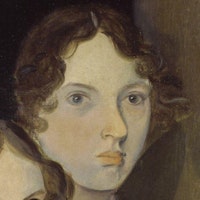
Emily Brontë
Theme: Belief and Faith
About This Emily Brontë Quotation [Commentary]
Siobhan Craft Brownson’s Commentary On No Coward Soul Is Mine
This creation of a minister’s daughter is indeed astonishing for its blunt rejection of orthodox religion–
Vain are the thousand creeds
That move men’s heart, unutterably vain
Worthless as withered weeds
Or idlest froth amid the boundless main
—coupled with its embrace of a truer and more sustaining omnipresence of God:
With wide-embracing love
Thy spirit animates eternal years
Pervades and broods above,
Changes, sustains, dissolves, creates and rears.
Brontë reveals her ability to actually know the supreme being who is the Alpha and Omega of whom she learned in the Bible when she was but a small child:
Though Earth and moon were gone
And suns and universes ceased to be
And thou were left alone
Every existence would exist in thee.
—Siobhan Craft Brownson, Winthrop University. [No Coward Soul Is Mine, Emily Brontë, (The Poetry Foundation)].
Related Quotes
Copyright © 2017 – 2026 LuminaryQuotes.com About Us