


We feel most alive in the presence of the Beautiful for it meets the needs of our soul.
John O’Donohue

Hungry For Beauty
Topic: The Natural World
The human soul is hungry for beauty; we seek it everywhere – in landscape, music, art, clothes, furniture, gardening, companionship, love, religion and in ourselves. No one would desire not to be beautiful. When we experience the Beautiful, there is a sense of homecoming. Some of our most wonderful memories are of beautiful places where we felt immediately at home. We feel most alive in the presence of the Beautiful for it meets the needs of our soul.
John O'Donohue, born on January 1, 1956, in County Clare, Ireland, was a poet and author recognized for his contemplative approach to spirituality and nature. His early years, surrounded by the stark beauty of the Irish landscape, had a profound impact on his life's work. He studied at St. Patrick's College, Maynooth, where he completed his Ph.D. focusing on the philosophy of Hegel. O'Donohue was fluent in Irish, a skill that connected him deeply with his cultural roots and the literary heritage of his homeland.
After his ordination and time spent serving as a priest, O'Donohue shifted his focus to writing and public speaking. His works, including "Anam Cara" and "Beauty," reflect his commitment to revealing the interplay between the spiritual and the tangible. O'Donohue's philosophical background informed his writing, allowing him to present complex ideas with clarity. His books, examining the nuances of human relationships and the natural world, garnered attention for their depth and insight.
O'Donohue passed away on January 4, 2008. His contributions to the fields of philosophy, spirituality, and literature remain valued for their introspection and wisdom. His understanding of Celtic traditions and his perspective on the human experience continue to be appreciated by readers looking for substance and reflection in their contemplative pursuits.
.
O'Donohue, John. Beauty: The Invisible Embrace. Harper Perennial, 2004.
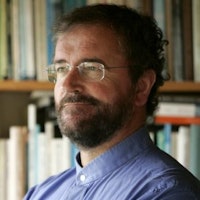
John O’Donohue
Theme: Beauty
About This John O’Donohue Quotation [Commentary]
John O’Donohue begins with a clear recognition: “The human soul is hungry for beauty.” We seek it in “landscape, music, art, clothes, furniture, gardening, companionship, love, religion and in ourselves.” By placing ordinary surroundings beside art, relationship, and spiritual life, John O’Donohue shows that the Beautiful is not distant or rare. It can be found wherever something true and fitting meets the needs of the soul.
“When we experience the Beautiful,” John O’Donohue writes, “there is a sense of homecoming.” This homecoming brings a feeling of belonging, as though something within us has been received and recognized. “Some of our most wonderful memories” are of beautiful places where we “felt immediately at home.” A landscape, a piece of music, a loving presence, or a familiar room can quietly restore our connection with ourselves and the world around us.
For this reason, “we feel most alive in the presence of the Beautiful.” The aliveness John O’Donohue describes comes from having “the needs of our soul” met, not from surface pleasure alone. Beauty awakens attention and wonder, drawing us more fully into the present. It offers not an escape from life, but a return to what helps us feel at home.
Additional John O’Donohue Quotations
On Being with Krista Tippett: Interview With John O’Donohue [Excerpt]
O’Donohue:I think it’s not just relevant, like, but I think it’s actually necessary, because I think that beauty is not a luxury, but I think it ennobles the heart and reminds us of the infinity that is within us. I always love what Mandela said when he came out — and I was actually in his cell in Robben Island one time, when I was in South Africa. After 27 years in confinement for a wrong you never committed, he turned himself into a huge priest and came out of this sentence, where he said that “[w]hat we are afraid of is not so much our limitations, but the infinite within us.” And I think that that is in everybody.
And I suppose the question that’s at the heart of all we’ve been discussing, really, which is a beautiful question, is the question of God. And I think that one of the reasons that so many people turn away from religion in our times is that the God question has died for them, because the question has been framed in such repetitive, dead language. And I think it’s the exciting question, once you awaken to the presence of God.
Tippett:Well, you have said — you write, “God is beauty.”
O’Donohue:Yeah, I have, yeah.
Tippett:Did you always feel this? Is that a sense that has grown in you, or something that you name now?
O’Donohue:It’s a sense that has grown in me, I suppose, that I’ve always kind of had the intuition about it, because I feel that there are two ways that you must always keep together in approaching the God thing. One is — and this is what I like about the Christian tradition, and this is where I diverge a little from the Buddhist tradition, even though I love Buddhism as a methodology to clean up the mind and get you into purity of presence. What I love is that at the heart of Christianity you have this idea of intimacy, which is true belonging, being seen, the ultimate home of individuation, the ultimate source of it, and the homecoming; that that’s what I’d call spirituality, is the art of homecoming. So it’s St. Augustine’s phrase, “Deus intimior intimo meo” — “God is more intimate to me than I am to myself.”
—O’Donohue, John. The Inner Landscape of Beauty. On Being with Krista Tippett (February 28, 2008).
Related Quotes
Copyright © 2017 – 2026 LuminaryQuotes.com About Us