


But the Supreme Physician does not employ common medical treatments such as these, with an extremely gentle technique He remedies all the greatest sins.
Shantideva

The Supreme Physician
Topic: Self-Cultivation & Health
Yet the suffering
Involved in my awakening will have a limit;
It is like the suffering of having an incision made
In order to remove and destroy greater pain.Even doctors eliminate illness
With unpleasant medical treatments,
So in order to overcome manifold sufferings
I should be able to put up with some discomfort.But the Supreme Physician does not employ
Common medical treatments such as these,
With an extremely gentle technique
He remedies all the greatest sins.
Shantideva
8th-century Indian philosopher, Buddhist monk, poet, and scholar
Life span
c. 685 - c. 763
Major philosophy
Mādhyamaka philosophy of Nāgārjuna
Place of study
Nalanda mahavihara
Shantideva, born around 685 CE in the ancient kingdom of Saurastra, now part of modern Gujarat, India, was a distinguished Indian Buddhist monk and scholar. He was the son of King Kalyanavarman and was initially named Śantivarman. Shantideva's early life was marked by auspicious signs and a deep inclination towards spirituality. Despite his royal lineage, he renounced his princely duties and chose the monastic life, eventually joining the prestigious Nalanda University. At Nalanda, Shantideva became an adherent of the Madhyamaka philosophy, a profound system of thought developed by Nagarjuna that delves into the nature of existence and the essence of enlightenment.
Shantideva's time at Nalanda was fraught with misunderstanding and controversy. His fellow monks perceived him as disinterested and aloof, often noting his absence from scholarly activities and practice sessions. This perception led to his nickname "Bhusuku," which implied that he only engaged in eating, sleeping, and idling. However, this view of Shantideva was dramatically overturned when he was challenged to give a public discourse. Rising to the occasion, Shantideva delivered "The Way of the Bodhisattva" (Bodhicharyavatara), a text that has since become a cornerstone of Mahayana Buddhist literature. This work, which eloquently addresses the virtues of compassion, wisdom, and patience, revealed his profound understanding and mastery of Buddhist teachings.
Shantideva's legacy extends far beyond his lifetime, which concluded around 763 CE. His teachings, particularly those encapsulated in the Bodhicharyavatara, continue to be studied and revered by Buddhist practitioners and scholars worldwide. The text's practical and philosophical insights have cemented Shantideva's status as one of the most influential figures in Buddhist history. His life and work exemplify the transformative power of inner wisdom and the enduring impact of genuine spiritual practice, offering timeless guidance that transcends cultural and temporal boundaries.
Guide to the Bodhisattva's Way of Life
Wilson, Andrew, editor. World Scripture - a Comparative Anthology of Sacred Texts. Paragon House, 1991, pp. 404-405 [Shantideva, Guide to the Bodhisattva's Way of Life (Bodhisattvacharyavatara) 7.22-2].
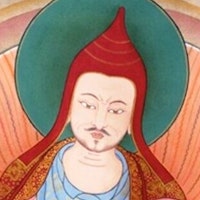
Shantideva
Theme: Healing
About This Shantideva Quotation [Commentary]
Shantideva begins by placing suffering within the movement toward awakening: “the suffering / Involved in my awakening will have a limit.” He compares this temporary hardship to “having an incision made / In order to remove and destroy greater pain.” The point is not to praise suffering, but to recognize that some discomfort may be endured when it helps overcome “manifold sufferings.” As Shantideva writes, “Even doctors eliminate illness / With unpleasant medical treatments,” and therefore, “I should be able to put up with some discomfort.” Healing here includes the willingness to bear what is necessary when it leads beyond greater pain.
Shantideva then turns from “unpleasant medical treatments” to the “Supreme Physician,” who “does not employ / Common medical treatments such as these.” Instead, “with an extremely gentle technique / He remedies all the greatest ills.” The contrast brings compassion into the center of the teaching. The spiritual path may require discipline, but the “Supreme Physician” does not rely on needless severity. In the verses that follow, Shantideva describes a gradual training in which a person begins with what can be given and, “when accustomed to this,” becomes capable of greater generosity.
Shantideva’s language joins patience with gentleness. The movement is from “greater pain,” through “some discomfort,” toward the “extremely gentle technique” of the Supreme Physician. What causes suffering is not ignored, but neither is transformation treated harshly. Healing takes place through a disciplined yet compassionate process that meets a person’s present capacity and gradually leads toward freedom from deeper suffering.
Additional Acharya Shantideva Passages
Related Quotes
Copyright © 2017 – 2026 LuminaryQuotes.com About Us