


Contemplation allows us to see the truth of things in their wholeness.
Richard Rohr

Just This
Topic: Wisdom & Understanding
Just This… is about seeing, but a kind of seeing that is much more than mere looking because it also includes recognizing and thus appreciating. This is the kind of seeing we do in contemplation, the centerpiece of any authentic inner dialogue. The contemplative mind does not tell us what to see, but teaches us how to see what we behold. Contemplation allows us to see the truth of things in their wholeness.
Richard Rohr, OFM, born in 1943 in Kansas, is a renowned American Franciscan priest and celebrated writer on spirituality, presently based in Albuquerque, New Mexico. Ordained in the Roman Catholic Church in 1970, Rohr embarked on a spiritual journey that has since garnered widespread attention and respect. By 2011, PBS had recognized him as "one of the most popular spirituality authors and speakers in the world," a testament to his influential presence in contemporary spiritual discourse.
In his pursuit of spiritual growth and community building, Rohr has achieved noteworthy milestones. He attained his Master of Theology degree from the University of Dayton in 1970. The subsequent year saw him founding the New Jerusalem Community in Cincinnati, Ohio. But perhaps his most enduring legacy stems from establishing the Center for Action and Contemplation (CAC) in Albuquerque, New Mexico, in 1986. Here, he has diligently served as the founding director and academic dean of the Living School for Action and Contemplation. Rohr's teachings, embodied in the school's curriculum, revolve around seven themes explored deeply in his book, "Yes, And."
Rohr's contributions to Christian spirituality, while transformative for many, have occasionally faced scrutiny and opposition, especially from certain conservative Catholic factions. These groups have sometimes critiqued his interpretations and teachings as diverging from traditional Catholic orthodoxy. In this context, a defining moment in his career was his meeting with Pope Francis, who gave a heartfelt endorsement to Rohr's book, "The Universal Christ." This endorsement can be viewed as a significant vindication of Rohr's teachings. It not only bridged potential theological divides but also highlighted Rohr's influential and valued position within the broader spectrum of Christian thought and practice.
Just This
Rohr, Richard. Just This: The Power of Presence. Sounds True, 2018.] Pp. 7-8.
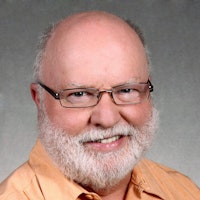
Richard Rohr
Theme: Wisdom
About This Richard Rohr Quotation [Commentary]
Excerpt from the Introduction to “Just This”
Perhaps more than anything else, “Just This” is a book about seeing, but a kind of seeing that is much more than mere looking because it also includes recognizing and thus appreciating. This is the kind of seeing we do in contemplation, the centerpiece of any authentic inner dialogue. The contemplative mind does not tell us what to see, but teaches us how to see what we behold.
Contemplation allows us to see the truth of things in their wholeness. It is a mental discipline and gift that detaches us, even neurologically, from our addiction to our habitual way of thinking and from our left brain, which likes to think it is in control. We stop believing our little binary mind (which strips things down to two choices and then usually identifies with one of them) and begin to recognize the inadequacy of that limited way of knowing reality. In fact, a binary mind is a recipe for superficiality, if not silliness. Only the contemplative, or the deeply intuitive, can start venturing out into much broader and more open-ended horizons. This is probably why Einstein said that: “Imagination is more important than knowledge. Knowledge is limited. Imagination encircles the world.”—Albert Einstein [“What Life Means to Einstein: An Interview by George S. Viereck,” The Saturday EveningPost, Oct. 26 1929:117].
But how do we learn this contemplative mind, this deep, mysterious, and life-giving way of seeing, of being with, reality? Why does it not come naturally to us? Actually, it does come momentarily, in states of great love and great suffering, but such wide-eyed seeing normally does not last. We return quickly to dualistic analysis and use our judgments to retake control. A prayer practice—contemplation—is simply a way of maintaining the fruits of great love and great suffering over the long haul and in different situations. And that takes a lot of practice-in fact, our whole life becomes one continual practice.
—Richard Rohr [Rohr, Richard. Just This: Embracing the Present Moment. Crossroad, 2011].
Resources
Related Quotes
Copyright © 2017 – 2026 LuminaryQuotes.com About Us